Vera C. Rubin Observatory’s First Discovery
Jun
24
Vera C. Rubin Observatory’s First Big Asteroid Discovery
In its first scan, the Vera Rubin Observatory discovered over 2,000 previously unknown asteroids within just 10 hours.
Demonstrates how new technology is revolutionizing astronomy and sky surveys.
Helps in mapping near-Earth objects, understanding asteroid populations, and possibly protecting Earth.
Shows how big-data and modern telescopes help us explore the skies faster than ever.
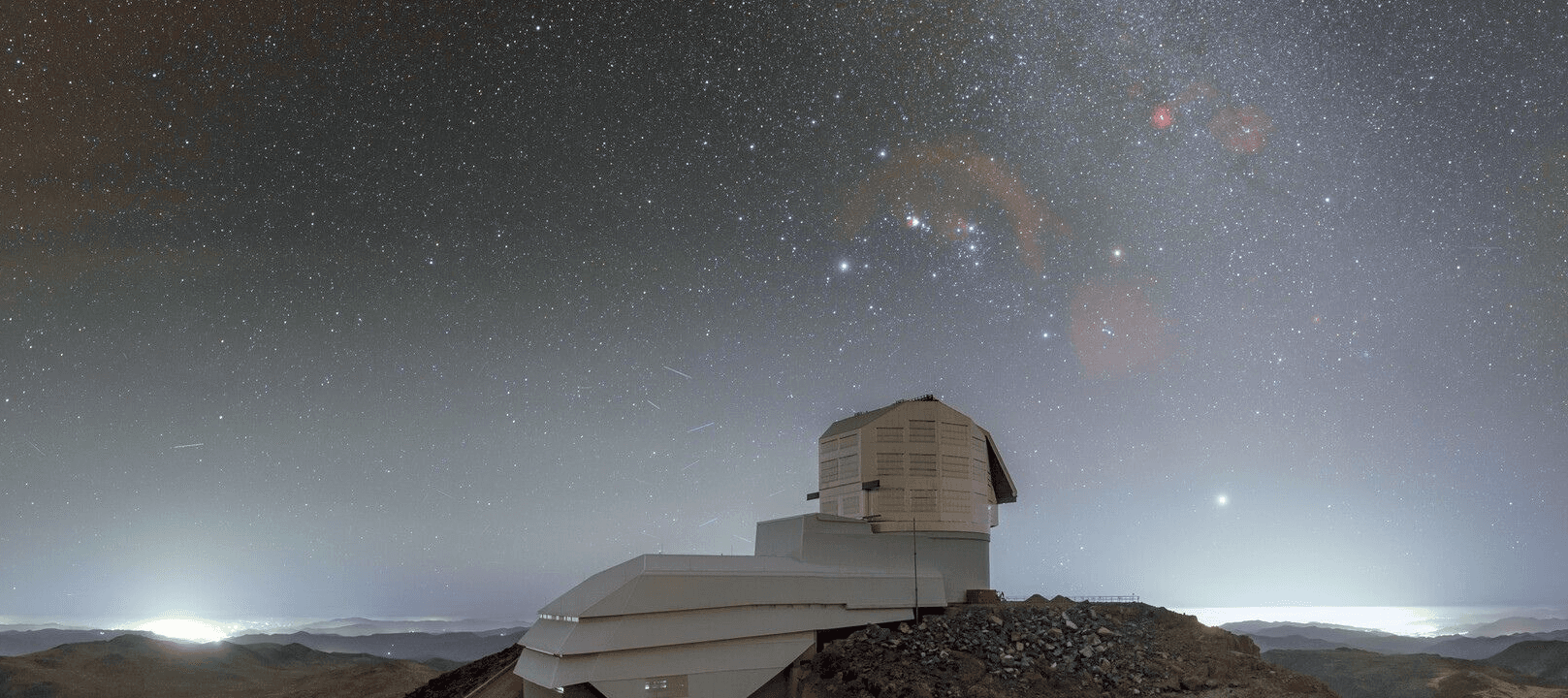
There are dozens of telescopes on Earth and satellites in the sky searching for new objects that might pose a threat to our planet. The National Science Foundation-Department of Energy’s Vera C. Rubin Observatory in Chile was not built to be an all-in-one asteroid detector.
Still, as a fast-moving, machine-learning facility, the observatory is the most effective at spotting interstellar objects passing through the solar system, according to the NSF.
The Vera C. Rubin Observatory took two decades to complete and was named after the American astronomer credited with the first evidence of dark matter.
The Rubin team revealed the first images taken by the observatory, including parts of the Milk Way and beautiful spiral galaxies. Among the first images were more than 2,000 asteroids, including seven near-Earth asteroids previously undocumented in NASA’s Small-Body Database.