2. Atmospheric Pollution as a Technosignature
2. Atmospheric Pollution as a Technosignature
Nitrogen dioxide: the signature of combustion
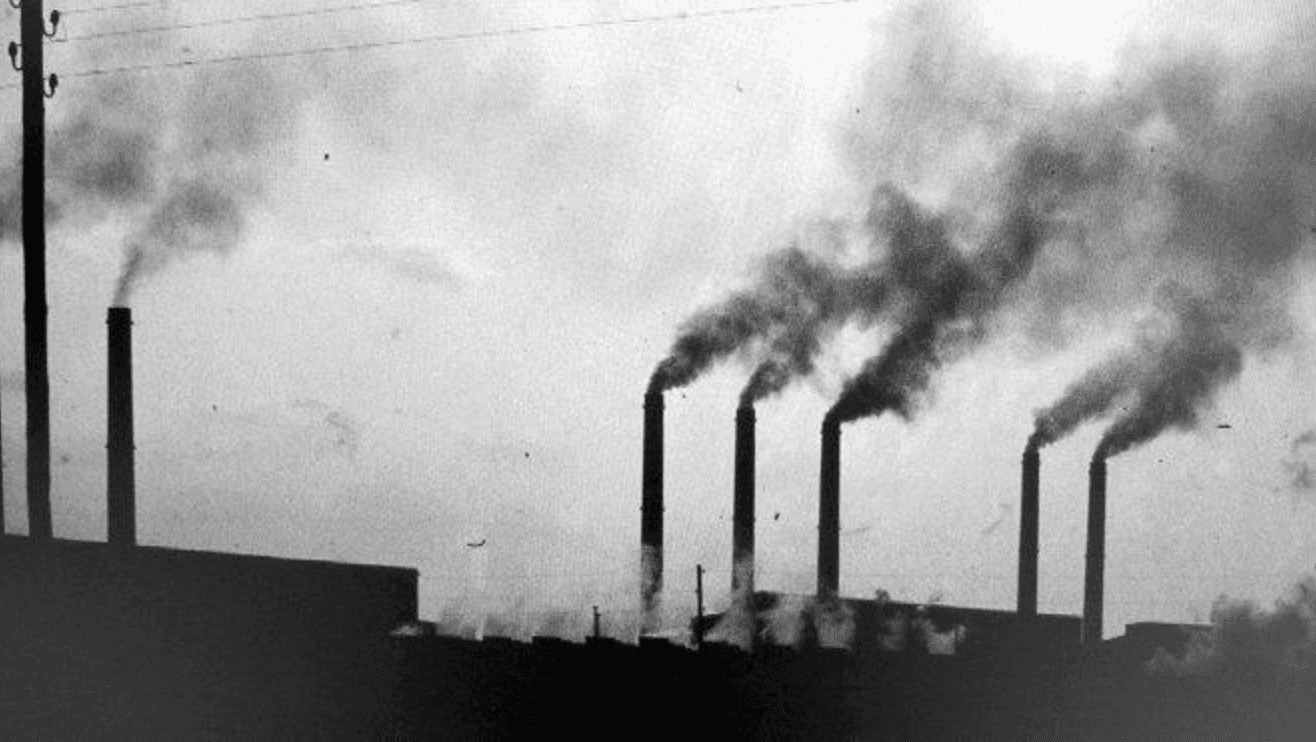
Nitrogen dioxide, or NO₂, is produced naturally by processes such as lightning, soils and wildfires. On modern Earth, however, major concentrations around industrial areas are associated with combustion, including fossil-fuel use.
A 2021 study investigated whether unusually abundant NO₂ could be detected in the atmosphere of a nearby Earth-like planet. The model found that a proposed 15-meter space telescope could, under favorable cloud-free assumptions, detect present-day terrestrial NO₂ levels on an Earth-like planet approximately 10 parsecs—or 33 light-years—away after roughly 400 hours of observation.
However, NO₂ alone would not prove the existence of aliens. Clouds and aerosols could imitate or obscure part of its spectral signature, and natural NO₂ sources would have to be carefully evaluated. It would be a candidate technosignature requiring supporting evidence, not a stand-alone discovery. Kopparapu et al., The Astrophysical Journal
Artificial chemicals
Some gases are more compelling because they have no known significant natural source in an Earth-like environment. Possible examples include industrial fluorinated compounds such as:
Tetrafluoromethane, CF₄
Hexafluoroethane, C₂F₆
Octafluoropropane, C₃F₈
Sulfur hexafluoride, SF₆
Nitrogen trifluoride, NF₃
Certain chlorofluorocarbons, or CFCs
These chemicals could be accidental pollutants—or, more speculatively, gases deliberately released to warm or terraform a cold planet. Many absorb strongly at infrared wavelengths and can persist for long periods.
Models suggest that sufficiently high concentrations might be detectable in favorable nearby systems. These are theoretical detectability studies; none of these gases has been identified as a technosignature on an exoplanet. Schwieterman et al., The Astrophysical Journal
Important scientific caution
Finding one unusual molecule would not be enough. Researchers would need to examine:
Whether the gas could be produced geologically or biologically
The planet’s temperature, atmospheric composition and host star
Whether clouds or other molecules could produce a similar spectrum
Whether independent observations reproduce the result
Whether several technosignatures occur together
The strongest case would come from multiple, mutually supporting clues—for example, artificial chemicals combined with unusual heat emissions or nighttime illumination.