Earth's Quasi-Moon
Oct
22
2025 PN7 - Earth's Quasi-Moon
Astronomers discovered an asteroid, 2025 PN7, that shares a similar orbit to Earth and is considered a " quasi-moon" of Earth
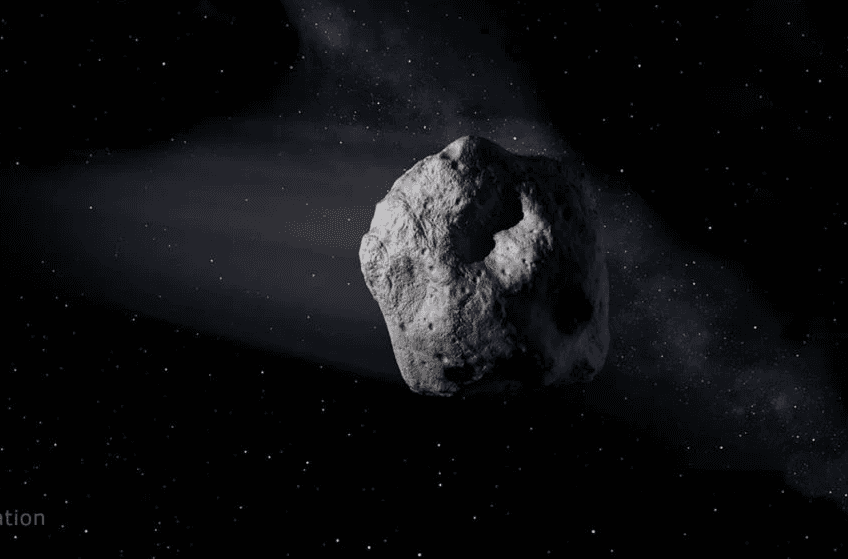
Will Earth have 2 moons orbiting it? Astronomers explain the 'quasi-moon
Earth will have a visitor within its orbit for the next several decades, according to astronomers.
An asteroid named 2025 PN7 has become a "quasi-moon" to Earth, as it will be sharing an orbit with our planet until 2083, according to a paper published last month in IOP Science.
Quasi-moons are not real moons and don't actually orbit the Earth, although they sometimes appear to do so for short periods of time, Phil Nicholson, professor of astronomy at Cornell University, told ABC News. Instead, they orbit the sun -- like typical asteroids -- on paths that are "very similar" to Earth's.
"As a result, they sometimes 'keep company' with the Earth for years, or even decades," Nicholson said. "Think of a wolf that follows the camp of a band of prehistoric hunters, looking for scraps, but doesn’t actually become a part of their band and eventually leaves."
The asteroid is considered a quasi-moon because "it only looks like it's going around the Earth from our point of view," Zoe Ponterio, manager of Cornell University's Spacecraft Planetary Image Facility, told ABC News.
Quasi-moons are typically quite small and not visible without a telescope, Nicholson said. The object is also extremely dim, with a magnitude of just 26, according to NASA, which would not be picked up by regular telescopes.
"This object is far too small, dark, and distant for us to see without very powerful telescopes, so the average person will not see a second moon in the sky," Ponterio said.