Hubble Space Telescope
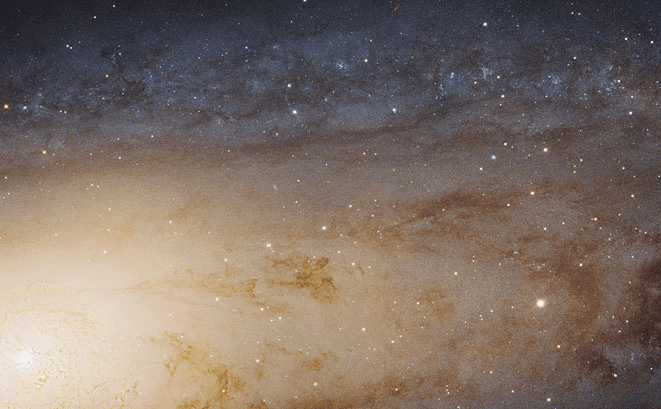
The Hubble Space Telescope is a powerful observatory that orbits Earth and captures stunning, high-resolution images of stars, galaxies, and nebulae without interference from Earth’s atmosphere. Since its launch in 1990, it has revolutionized our understanding of the universe and provided some of the most iconic space images in history.
The Hubble Space Telescope is located in low Earth orbit, approximately 547 kilometers (340 miles) above the Earth’s surface.
It circles the Earth at a speed of about 28,000 kilometers per hour (17,500 miles per hour) and completes one orbit roughly every 95 minutes, allowing it to observe the universe without interference from Earth’s atmosphere.
1. Basic Introduction
The Hubble Space Telescope is a powerful space observatory that orbits Earth and captures incredibly detailed images of distant stars, galaxies, and nebulae. Since its launch in 1990, it has transformed our understanding of the universe.
2. Scientific Focus
Hubble is a space-based telescope designed to observe the universe in visible, ultraviolet, and near-infrared light. It helps scientists study the birth and death of stars, the expansion of the universe, and the evolution of galaxies.
3. Historical Perspective
Launched by NASA and ESA in 1990, the Hubble Space Telescope has become one of the most important scientific instruments in history, providing groundbreaking discoveries and iconic images that changed how humans view space.
4. Educational Meaning
The Hubble Space Telescope is a giant camera in space that takes stunning pictures of the universe without being blocked by Earth’s atmosphere. It allows us to see planets, stars, and galaxies more clearly than ever before.
5. Inspiration
The Hubble Space Telescope is a window into the cosmos, revealing the beauty and mystery of the universe. Its breathtaking images inspire scientists, students, and dreamers around the world to explore the wonders of space.